





Garlic (Allium sativum) stands as one of the most thoroughly investigated functional superfoods in clinical nutrition and preventive cardiology. Revered for millennia across ancient medical systems, garlic’s therapeutic potency is driven primarily by bioactive organosulfur compounds—specifically allicin, diallyl disulfide (DADS), and S-allyl cysteine (SAC). When activated properly through cellular disruption, whole garlic delivers clinically proven support across 6 major physiological pathways: enzymatic allicin activation, systemic blood pressure modulation via gasotransmitter signaling, anti-atherosclerotic lipid defense, immune phagocytic stimulation, hepatic glutathione upregulation, and antimicrobial microvascular perfusion.
Quick Nutrition Science & Key Takeaways
- The 10-Minute Resting Rule: Allicin does not pre-exist in intact cloves; crushing or mincing ruptures plant vacuoles, allowing alliin to interact with alliinase. Letting garlic rest for 10 minutes before heating preserves maximal bioactive yield.
- Cardiovascular Vasodilation: Garlic metabolites stimulate endothelial nitric oxide (NO) and hydrogen sulfide (H2S) production, promoting arterial smooth muscle relaxation and clinically lowering systolic and diastolic blood pressure.
- Lipid & Plaque Defense: S-allyl cysteine and volatile thiosulfinates inhibit hepatic cholesterol biosynthesis (HMG-CoA reductase) and shield low-density lipoproteins (LDL) against oxidative damage.
- Immune & Hepatic Support: Garlic bioactives enhance natural killer (NK) cell and macrophage phagocytosis while elevating endogenous cellular glutathione (GSH) to facilitate xenobiotic detoxification.
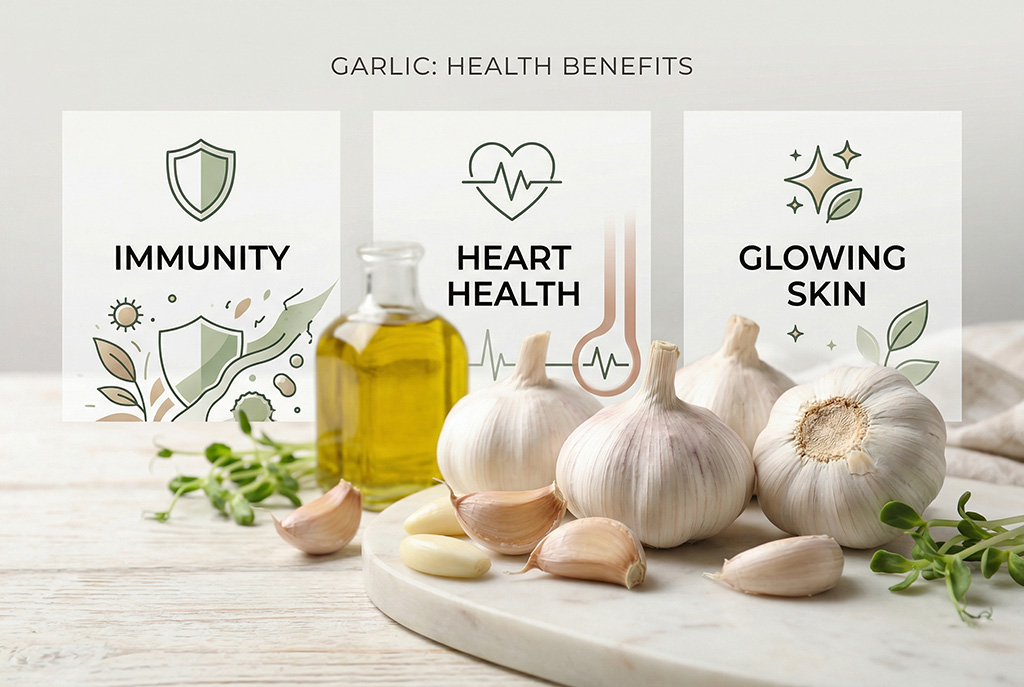
Nutritional Profile at a Glance (Per 100g & 1 Fresh Clove)
According to official data from the USDA FoodData Central, raw garlic provides an exceptionally dense concentration of essential micronutrients relative to its caloric footprint. While rarely eaten in 100g portions, evaluating both 100g benchmarks and an everyday culinary serving of one medium clove (~3 grams) reveals substantial concentrations of manganese, vitamin B6, vitamin C, and selenium:
| Nutrient / Micronutrient | Amount per 100g | Amount per 1 Clove (~3g) | Daily Value (% DV per 100g) | Key Physiological Function |
|---|---|---|---|---|
| Calories | 149 kcal | ~4.5 kcal | 7% | Nutrient-dense, low-calorie cellular energy |
| Carbohydrates | 33.06 g | ~0.99 g | 12% | Composed primarily of gut-healthy prebiotic fructans |
| Dietary Fiber | 2.1 g | ~0.06 g | 8% | Nourishes beneficial Bifidobacterium species |
| Protein | 6.36 g | ~0.19 g | 13% | Supplies sulfur-containing amino acid precursors |
| Total Fat | 0.50 g | ~0.015 g | 1% | Negligible lipid baseline, heart-healthy |
| Vitamin C | 31.2 mg | ~0.94 mg | 35% | Endothelial radical quenching & collagen synthesis |
| Vitamin B6 (Pyridoxine) | 1.235 mg | ~0.037 mg | 73% | Regulates homocysteine metabolism & neurotransmission |
| Manganese | 1.672 mg | ~0.050 mg | 73% | Critical cofactor for mitochondrial superoxide dismutase |
| Selenium | 14.2 mcg | ~0.43 mcg | 26% | Essential mineral for glutathione peroxidase synthesis |
| Potassium | 401 mg | ~12.0 mg | 9% | Counteracts excess dietary sodium and vascular tension |
| Calcium | 181 mg | ~5.4 mg | 14% | Supports skeletal integrity and muscular contraction |
6 Science-Backed Health Benefits of Garlic
Modern pharmacology and randomized clinical trials confirm that garlic functions as a multifaceted functional botanical. Here are the 6 primary evidence-based health benefits verified by peer-reviewed clinical research:
1. Enzymatic Allicin Activation and the Crucial 10-Minute Crushing Rule
Intact, unblemished garlic cloves contain virtually zero active allicin. In the unbroken plant tissue, the sulfur-containing amino acid derivative alliin resides safely within mesophyll storage cells, while the heat-sensitive enzyme alliinase is compartmentalized inside separate cellular vacuoles. As long as the clove remains structurally undisturbed, the two compounds never meet.
When garlic is crushed, minced, or chewed, plant cell walls rupture, allowing alliinase to catalyze the rapid hydrolysis of alliin into volatile allicin (diallyl thiosulfinate). However, alliinase is extremely thermosensitive and is rapidly denatured at temperatures above 140°F (60°C) or in high-acid gastric juices (pH < 3.0). Tossing whole or freshly chopped cloves directly into sizzling culinary oil deactivates the enzyme within seconds, arresting allicin synthesis.
The solution is the evidence-backed 10-minute resting rule: finely crush, mince, or press your garlic, then allow it to rest at room temperature undisturbed for 10 full minutes before cooking. This simple step gives alliinase sufficient time to convert available alliin into stable bioactive allicin. As thoroughly documented in a therapeutic review on garlic and allicin biochemistry, this enzymatic incubation preserves allicin and its health-protective breakdown cascades even when exposed to subsequent moderate cooking heat.
2. Systemic Blood Pressure Reduction via Nitric Oxide and Hydrogen Sulfide Signaling
Essential hypertension remains the foremost modifiable risk factor for stroke, myocardial infarction, and vascular dementia. Garlic functions as an effective natural vascular regulator by enhancing the body’s primary endogenous vasodilatory gasotransmitters.
Once absorbed, garlic’s sulfur volatiles act on vascular endothelial cells to upregulate endothelial nitric oxide synthase (eNOS), boosting bioavailability of nitric oxide (NO). Nitric oxide diffuses into vascular smooth muscle, activating soluble guanylyl cyclase (sGC) and elevating cyclic GMP, which triggers smooth muscle hyperpolarization and arterial dilation. Simultaneously, red blood cells interact with garlic-derived polysulfides to synthesize hydrogen sulfide (H2S), a second gaseous mediator that relaxes resistance arteries and suppresses vascular tension.
In a comprehensive meta-analysis published in PubMed on garlic and blood pressure, standardized garlic preparations demonstrated mean reductions of 8.3 mmHg in systolic blood pressure and 5.5 mmHg in diastolic blood pressure among hypertensive participants—a clinical efficacy comparable to standard first-line antihypertensive medications. For holistic cardiovascular care, integrate garlic consumption alongside other natural strategies to support healthy blood pressure.
3. Lipid Profile Modulation and Prevention of Oxidized LDL Plaque Formation
Atherosclerotic cardiovascular disease initiates when circulating low-density lipoprotein (LDL) particles infiltrate the arterial subendothelial space and undergo oxidative modification. Unchecked oxidized LDL (ox-LDL) triggers endothelial injury, recruitment of circulating monocytes, and relentless foam cell accumulation within arterial walls.
Garlic exerts a dual therapeutic defense against lipid dysregulation. First, water-soluble S-allyl cysteine (SAC) and diallyl sulfides metabolically inhibit hepatic 3-hydroxy-3-methylglutaryl-coenzyme A (HMG-CoA) reductase, the rate-limiting enzyme responsible for de novo cholesterol biosynthesis. Second, garlic’s sulfur-rich antioxidant network scavenges superoxide anions and hydroxyl radicals, directly preventing the oxidative conversion of native LDL into cytotoxic ox-LDL.
Clinical human trials demonstrate that consistent garlic consumption over 8 to 12 weeks yields an average 7% to 10% decrease in total cholesterol and an 8% to 12% reduction in atherogenic LDL particles. To optimize your long-term cardiovascular health, pair regular garlic intake with evidence-backed strategies for lipid management.
4. Immune Phagocytosis and Cold Severity Attenuation
Garlic serves as a potent botanical immunomodulator that coordinates both innate cellular defense and adaptive antibody responses. Rather than simply over-stimulating the immune system, garlic fine-tunes cellular reactivity to neutralize seasonal pathogens without provoking excessive systemic inflammation.
Organosulfur constituents, especially allicin, diallyl sulfide (DAS), and diallyl disulfide (DADS), significantly boost the proliferation and phagocytic capacity of macrophages, neutrophils, and natural killer (NK) cells. Concurrently, garlic regulates the secretion of immune signaling molecules, dampening excessive pro-inflammatory mediators such as tumor necrosis factor-alpha (TNF-α) and interleukin-6 (IL-6) while enhancing protective interleukin-10.
In clinical trials evaluating upper respiratory tract infections, individuals consuming standardized daily garlic experienced a 63% lower incidence of the common cold and a 61% reduction in total sick days compared to placebo controls. When managing seasonal challenges or joint discomfort, combining garlic with other proven botanical compounds for systemic inflammation delivers robust, multi-pathway botanical support.
5. Cellular Glutathione Upregulation and Hepatic Xenobiotic Detoxification
The human liver performs non-stop chemical filtration, transforming endogenous metabolic byproducts, pharmaceutical compounds, and environmental xenobiotics into harmless, water-soluble molecules for excretion. This process relies heavily on Phase I cytochrome P450 oxidation balanced by Phase II enzymatic conjugation.
Garlic’s unique trisulfides, notably diallyl trisulfide (DATS), activate the transcription factor nuclear factor erythroid 2-related factor 2 (Nrf2). Translocating to the cellular nucleus, Nrf2 binds to antioxidant response elements (ARE), upregulating the biosynthesis of reduced glutathione (GSH)—the body’s premier intracellular antioxidant. Furthermore, garlic stimulates vital Phase II detoxifying enzymes, including glutathione S-transferase (GST) and quinone reductase.
Through this enzymatic upregulation, garlic shields hepatocyte membranes from oxidative peroxidation and enhances the safe clearance of environmental heavy metals and toxic metabolites without depleting intracellular antioxidant reserves.
6. Dermal Antimicrobial Defense and Microvascular Tissue Perfusion
Beyond internal cardiovascular and hepatic benefits, garlic exerts powerful localized antimicrobial effects and promotes microcirculatory tissue perfusion. Its natural broad-spectrum defensive properties have made it a cornerstone in folk dermatology and wound hygiene for centuries.
Allicin readily traverses phospholipid membranes of pathogenic microorganisms. Inside the bacterial or fungal cell, it reacts rapidly with thiol groups in crucial enzymes (such as alcohol dehydrogenase and RNA polymerases), disrupting microbial metabolism and inhibiting the proliferation of Gram-positive, Gram-negative, and fungal pathogens like Candida albicans. Simultaneously, sulfur-derived nitric oxide signaling enhances capillary perfusion in the microvasculature, supporting oxygen delivery and cellular regeneration in peripheral tissues.
Safety note: Despite its potent topical antimicrobial action, raw crushed garlic should never be applied directly to bare skin or open lesions without significant dilution in carrier oils, as concentrated allicin can cause severe contact dermatitis and chemical burns.
Garlic Bioactive Mechanisms: Evidence Matrix
Review this concise comparative matrix summarizing how garlic’s primary active compounds target specific cardiovascular, metabolic, and immune pathways:
| Health Target / Benefit | Primary Bioactive Agent | Biochemical Mechanism | Clinical Recommendation & Best Practice |
|---|---|---|---|
| 1. Enzymatic Activation | Alliin & Alliinase enzyme | Mechanical cell lysis triggers rapid allicin synthesis | Crush or mince and wait 10 full minutes before heating |
| 2. Blood Pressure Reduction | Allicin & polysulfide metabolites | Endothelial nitric oxide (NO) and hydrogen sulfide (H2S) vasodilation | 1–2 fresh cloves daily; monitor if on prescription antihypertensives |
| 3. Lipid & Plaque Defense | S-allyl cysteine (SAC) & DADS | Inhibits hepatic HMG-CoA reductase and quenches LDL lipid peroxidation | Consume consistently over 8–12 weeks alongside high-fiber nutrition |
| 4. Immune Defense & Phagocytosis | Allicin & diallyl sulfide (DAS) | Upregulates macrophage and NK cell activity while balancing cytokines | Use at early symptom onset; combine with raw honey or warm broths |
| 5. Hepatic Glutathione Synthesis | Diallyl trisulfide (DATS) | Nrf2 transcription activation elevates reduced glutathione (GSH) | Incorporate into daily cooking to support Phase II liver conjugation |
| 6. Antimicrobial & Microvascular | Allicin & sulfur volatiles | Thiol group binding in microbes and capillary microvascular perfusion | Dilute heavily in carrier oils for topical use; never apply raw on bare skin |
Scientific Debunking & Critical Redlines
While garlic is a universally celebrated culinary ingredient and functional superfood, therapeutic doses carry specific clinical contraindications that require strict safety awareness:
- Pre-Operative Bleeding & Anticoagulant Interactions: Garlic exhibits mild anti-platelet aggregation and fibrinolytic properties. Ingesting large quantities of raw garlic or high-potency garlic supplements can prolong bleeding time. Discontinue high-dose garlic supplementation at least 7 to 10 days prior to elective surgery or major dental procedures. Patients taking prescription blood thinners (such as warfarin, clopidogrel, aspirin, or direct oral anticoagulants) must consult their prescribing physician before using concentrated garlic extracts.
- GERD, Heartburn & Gastric Mucosal Irritation: Raw garlic contains fructans and pungent sulfur volatiles that can relax the lower esophageal sphincter (LES) and stimulate hydrochloric acid secretion. Individuals with gastroesophageal reflux disease (GERD), active gastritis, or peptic ulcers should avoid eating raw garlic on an empty stomach and opt for cooked or aged garlic extracts instead.
- The Myth of Swallowing Whole Unchewed Cloves: A pervasive internet myth recommends swallowing entire, uncut garlic cloves like pills to prevent odor while reaping health benefits. This practice is completely ineffective. Without mechanical chewing or crushing, the alliin and alliinase enzymes never intermix, resulting in zero allicin synthesis. The intact clove passes through the gastrointestinal tract largely undigested, yielding negligible therapeutic benefit and posing a small risk of intestinal obstruction.
- Severe Botulism Warning (Garlic-in-Oil Preparations): Garlic grows underground and can harbor spores of Clostridium botulinum. Immersing raw, unacidified garlic cloves in cooking oils creates an oxygen-free (anaerobic), room-temperature environment ideal for botulinum spore germination and lethal neurotoxin production. Always store homemade garlic-infused oils in the refrigerator and discard them after 4 days.
Food Synergy: Best Science-Backed Pairings
To maximize the biochemical absorption and systemic impact of garlic’s bioactive compounds, pair it with complementary kitchen ingredients:
- Garlic + Extra Virgin Olive Oil & Stewed Tomatoes: Allicin and lipid-soluble diallyl sulfides dissolve smoothly into monounsaturated olive oil. Cooking crushed, rested garlic with olive oil and lycopene-rich stewed tomatoes enhances the bioavailability of fat-soluble carotenoids while providing a protective lipid matrix that buffers allicin against thermal degradation.
- Raw Crushed Garlic + Raw Unpasteurized Honey: Combining freshly crushed, rested garlic with enzyme-rich raw honey creates an oxymel-style functional synergy. Honey’s natural oligosaccharides and high osmolality coat and soothe sensitive throat tissues while stabilizing garlic’s volatile allicin, creating a potent kitchen remedy for early scratchy throat discomfort.
- Garlic + Lemon Juice & Fresh Parsley: Fresh flat-leaf parsley is exceptionally rich in natural chlorophyll, which chemically complexes with volatile sulfur compounds (such as allyl methyl sulfide) in the oral cavity to neutralize garlic breath. Meanwhile, vitamin C in fresh lemon juice provides complementary antioxidant synergy that reinforces endothelial defense.
Kitchen-Ready Quick Recipes
Incorporate therapeutic, allicin-activated garlic into your daily dietary routine with these two fast, nutrient-dense preparations:
Recipe 1: 5-Minute Mediterranean Crushed Garlic & Olive Oil Dressing
- Ingredients: 2 fresh garlic cloves (finely minced and rested 10 minutes), 3 tablespoons cold-pressed extra virgin olive oil, 1 tablespoon fresh lemon juice, 1 tablespoon finely chopped flat-leaf parsley, 1 pinch sea salt.
- Step 1 (Crush & Wait): Finely mince or grate the raw garlic cloves onto a cutting board. Let the minced garlic sit undisturbed for 10 full minutes to allow alliinase to synthesize peak allicin.
- Step 2 (Whisk & Emulsify): In a small glass bowl, whisk together the lemon juice and sea salt until dissolved. Add the rested garlic, then slowly drizzle in the extra virgin olive oil while whisking until a creamy emulsion forms.
- Step 3 (Serve): Stir in the chopped parsley and drizzle immediately over warm roasted vegetables, crisp salads, or grain bowls.
Recipe 2: Immune-Supporting Raw Garlic & Honey Elixir
- Ingredients: 1 fresh garlic clove (crushed to a fine paste), 1 tablespoon raw unpasteurized buckwheat or wildflower honey, 1 pinch ground cayenne pepper (optional).
- Step 1 (Press & Rest): Press the garlic clove through a garlic press into a small ceramic ramekin. Allow it to rest for 10 minutes at room temperature.
- Step 2 (Blend & Ingest): Fold in the raw honey and optional cayenne until thoroughly blended. Slowly take by the half-teaspoon during early seasonal throat tickles or chills to soothe mucous membranes and mobilize innate defenses.
Frequently Asked Questions (FAQ)
How long must garlic rest before heating, and why is this necessary?
Garlic must rest for 10 full minutes after being minced, crushed, or pressed. Intact garlic contains neither allicin nor its active odor; it contains only alliin and the enzyme alliinase separated in different cell compartments. Mechanical crushing ruptures cell membranes, initiating the enzymatic reaction that generates allicin. Because alliinase is destroyed by culinary heat above 140°F (60°C), allowing this 10-minute resting period at room temperature ensures maximum allicin is formed before any cooking heat is applied.
Does cooking destroy all the health benefits of garlic?
Cooking does not destroy all health benefits, but high heat significantly diminishes volatile allicin if garlic is cooked immediately after cutting. However, if you practice the 10-minute resting rule, allicin and secondary sulfur compounds become noticeably more heat-stable. Furthermore, cooked garlic continues to provide dietary prebiotic fiber, vitamins B6 and C, manganese, selenium, and water-soluble compounds like S-allyl cysteine, which withstand normal culinary simmering.
How can I neutralize garlic breath and body odor naturally?
Garlic breath is primarily caused by allyl methyl sulfide (AMS), a volatile sulfur metabolite that is absorbed into the bloodstream and exhaled through the lungs. To naturally neutralize garlic breath, consume foods rich in polyphenols and chlorophyll immediately following your meal. Chewing raw flat-leaf parsley, fresh mint leaves, or eating raw sliced apples and drinking green tea significantly speeds the chemical breakdown and deodorization of sulfur compounds in both the mouth and digestive tract.
Disclaimer: This article is intended strictly for educational and informational purposes and does not substitute for personal medical advice, diagnosis, or treatment. Always consult with a qualified physician or healthcare provider before significantly altering your dietary intake or starting high-dose garlic supplementation, especially if taking anticoagulants, antihypertensive drugs, or preparing for scheduled surgery.



You really make it appear so easy together with your presentation however I
find this topic to be really one thing which I think I might never understand.
It kind of feels too complex and extremely vast for me.
I am looking ahead to your subsequent post, I will attempt to get the hang of it!