



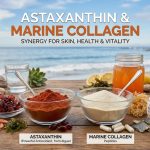
Wasting hundreds of dollars on topical creams won’t fix the accelerated collagen degradation happening deep within your dermis. True skin reversal requires addressing chronological aging and UV-induced photoaging from the inside out. By pairing the world’s most potent natural antioxidant with bioavailable marine peptides, you can essentially create an internal shield and rebuild mechanism for your skin.
Core Summary (Key Takeaways)
- Astaxanthin neutralizes UV damage: This microalgae-derived antioxidant is 6,000 times stronger than Vitamin C, directly preventing UV-induced collagen breakdown.
- Marine collagen rebuilds the matrix: Hydrolyzed fish collagen peptides stimulate fibroblast activity, clinically shown to reduce wrinkle depth by 35% in 12 weeks.
- The ultimate synergy: Taking both supplements together simultaneously stops future oxidative degradation while accelerating the synthesis of new, resilient skin tissue.
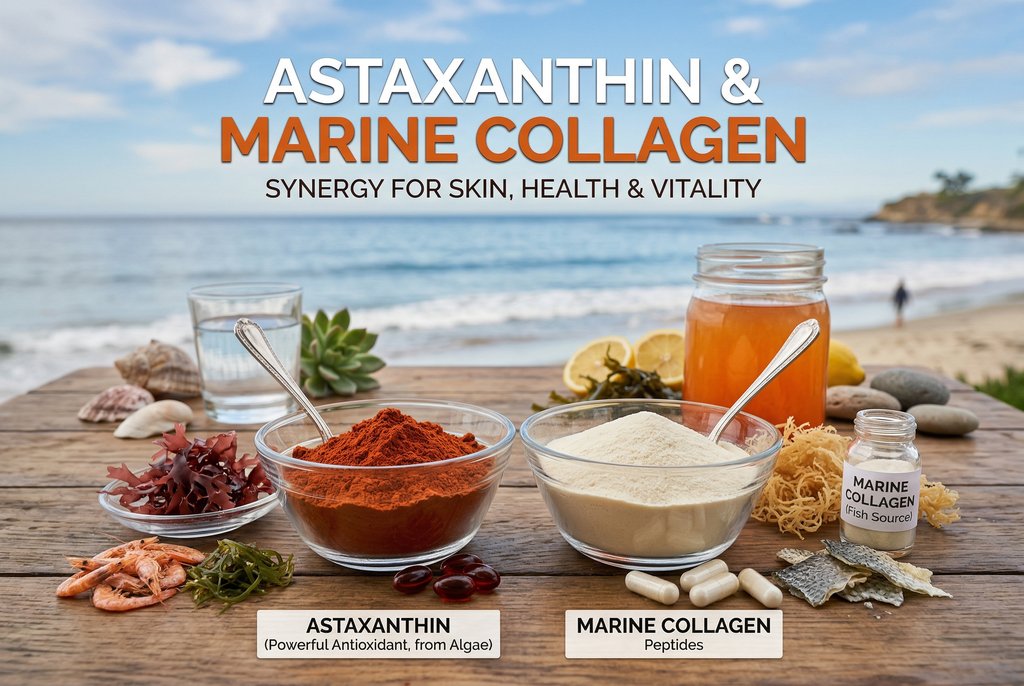
The Science of Skin Aging: Why Topicals Aren’t Enough
Topical skincare primarily targets the stratum corneum (the outermost layer), but the true structural integrity of your face relies on the dermis. As we cross our 30s, our natural collagen production plummets, and environmental free radicals accelerate matrix metalloproteinase (MMP) enzymes that literally destroy existing collagen.
To fundamentally restore skin elasticity and hydration, we must use hydrolyzed marine collagen peptides. Because fish-derived collagen has an ultra-low molecular weight, it easily crosses the gastrointestinal barrier to reach the bloodstream. Once there, it directly triggers your skin’s fibroblasts to synthesize new Type I collagen.
Astaxanthin: The Ultimate Collagen Protector
Rebuilding collagen is entirely useless if you allow daily oxidative stress to continuously tear it down. This is where Astaxanthin—the red pigment found in wild salmon and microalgae—changes the game. Unlike other antioxidants, astaxanthin can span the entire cellular membrane, providing unparalleled protection against reactive oxygen species (ROS).
According to comprehensive reviews, continuous astaxanthin intake effectively reduces oxidative stress and significantly prevents the secretion of inflammatory cytokines. It essentially acts as an internal sunscreen, actively stopping UV rays from degrading your newly formed collagen matrix.
“Clinical studies demonstrate that daily oral supplementation of astaxanthin (4-6 mg) combined with hydrolyzed marine collagen improves dermal acoustic density, boosts skin elasticity, and significantly reduces the depth of periorbital wrinkles within 8 to 12 weeks.”
Comparing Anti-Aging Interventions
How does this internal protocol stack up against traditional skincare favorites like Vitamin C or Retinol? While topical actives are beneficial, they often come with skin barrier irritation and limited dermal penetration.
| Anti-Aging Compound | Primary Mechanism | Efficacy Level & Penetration | Potential Risks / Drawbacks |
|---|---|---|---|
| Astaxanthin (Oral) | Systemic ROS neutralization, prevents MMP collagen destruction | Very High (Cellular level throughout the body) | None (Generally safe at 4-12mg/day) |
| Marine Collagen (Oral) | Stimulates fibroblast production of Type I collagen & Hyaluronic Acid | High (Bioavailable peptides reach the deep dermis) | Not suitable for individuals with severe fish allergies |
| Retinol (Topical) | Accelerates cell turnover, stimulates superficial collagen | Moderate to High (Epidermis and upper dermis) | Skin barrier disruption, peeling, extreme sun sensitivity |
| Vitamin C (Topical) | Neutralizes surface free radicals, brightens skin tone | Moderate (Highly unstable formulation) | Oxidizes quickly, potential irritation at high percentages |
The Synergistic Protocol: How to Maximize Results
To achieve the clinically observed 35% reduction in wrinkle score, timing and quality matter. You should aim for a daily intake of 5 to 10 grams of hydrolyzed marine collagen combined with 6 to 12 mg of natural Astaxanthin.
For maximum absorption, take your collagen on an empty stomach with a source of Vitamin C, and consume astaxanthin with a healthy fat, as it is highly fat-soluble. For deep-dive clinical data on how fish-derived peptides enhance structural skin health, you can review this triple-blind, placebo-controlled clinical trial on marine collagen.
Furthermore, if you want to understand the exact molecular pathways of cellular defense, explore the comprehensive mechanisms of astaxanthin in skin repair published on the NCBI database.
Disclaimer: This article is for informational purposes only and is not intended as medical advice. Always consult with a qualified healthcare professional before making changes to your health regimen.
FAQ
When is the best time of day to take astaxanthin and marine collagen?
Marine collagen is best taken in the morning on an empty stomach to avoid competition with other dietary proteins. Astaxanthin should be taken with your first meal of the day that contains healthy fats (like avocados or eggs) to maximize its fat-soluble absorption.
Can I get enough astaxanthin just from eating salmon?
While wild-caught sockeye salmon contains the highest natural levels of astaxanthin, you would need to consume roughly 6 to 8 ounces every single day to reach the clinical dose of 6mg used in anti-aging studies. A high-quality microalgae extract supplement is much more efficient and practical.
Does marine collagen cause breakouts or acne?
Pure, high-quality hydrolyzed marine collagen rarely causes breakouts and is highly biocompatible. In fact, by reducing skin inflammation and improving barrier hydration, it often helps balance sebum production. However, always ensure your supplement is free from heavy metals, fillers, and artificial additives.