





When a hot curling iron brushes your neck or boiling water splashes your hand, your first instinct might be to grab an ice pack. Stop right there. Applying extreme cold to compromised skin is one of the most dangerous, yet widely practiced, home remedies. Treating a minor burn incorrectly doesn’t just prolong the pain; it exponentially increases the risk of permanent scarring and post-inflammatory hyperpigmentation. Let’s dive into the exact science of thermal injuries and uncover the only first-aid protocol trusted by dermatologists.
Core Summary (Key Takeaways)
- Ice worsens burns by causing extreme vasoconstriction, which starves damaged skin of blood flow and can lead to irreversible tissue necrosis.
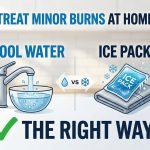
- Cool running water is the medical gold standard; flushing the area for 10 to 20 minutes effectively dissipates residual heat and halts the burning process.
- Proper aftercare blends health and beauty: keeping the burn moist with sterile ointments prevents deep scarring and maintains an even skin tone.
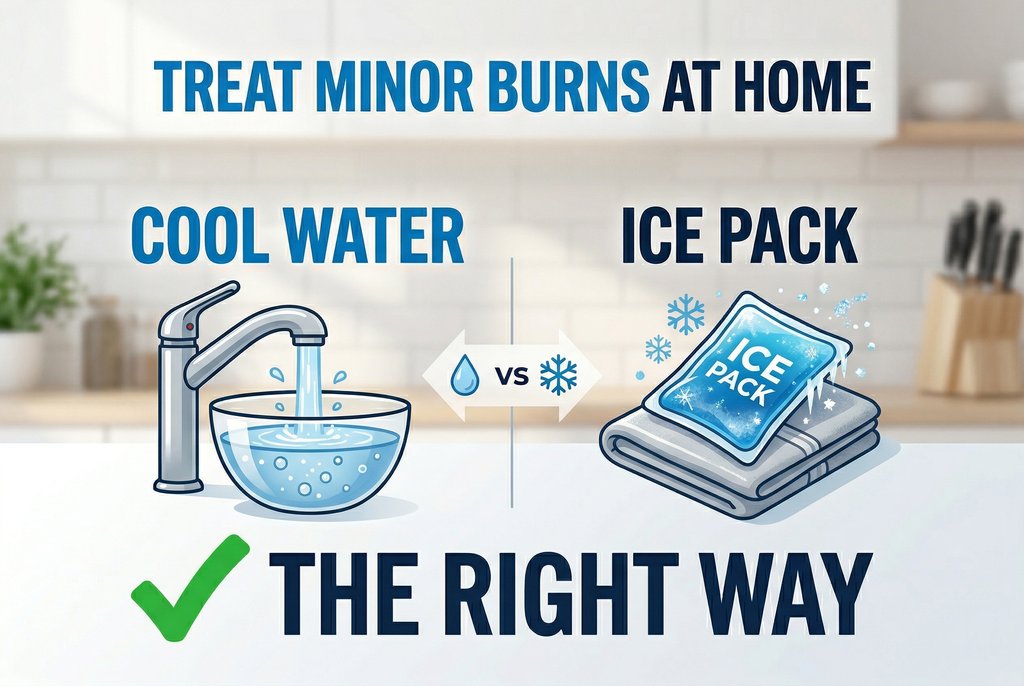
The Fatal Flaw of the Ice Pack Myth
It seems logical: fire is hot, so ice must be the ultimate cure. However, human skin relies on a delicate network of capillaries. When exposed to a thermal burn, skin cells undergo extreme trauma. Applying an ice pack immediately triggers severe vasoconstriction—the rapid narrowing of blood vessels. This sudden restriction cuts off the essential oxygen and immune cells your skin desperately needs to begin the healing process.
Furthermore, placing ice directly on a fresh burn introduces a secondary injury: frostbite. The damaged epidermis no longer has its normal thermal regulatory defenses. According to authoritative guidelines from MedlinePlus (U.S. National Library of Medicine), applying ice or ice water can cause more profound cellular damage than the initial burn itself.
Why Cool Running Water is the Gold Standard
The true goal of burn first aid is not to freeze the skin, but to extract the residual heat. Even after you pull your hand away from a hot pan, the thermal energy continues to penetrate and destroy deeper layers of skin. Cool, gently running water (around 60°F or 15°C) acts as a perfect heat sink.
“The progression of a thermal injury does not stop when the heat source is removed. Immediate cooling with tap water for 20 minutes is the single most effective intervention to reduce burn depth and prevent the need for surgical grafting.”
Not only does cool water stop the thermal progression, but it also stabilizes mast cells, significantly reducing the release of histamine. This means less immediate swelling, less blistering, and a drastically reduced chance of noticeable scarring later. For those who prioritize a flawless complexion, this step is non-negotiable.
Comparative Analysis: Ice vs. Cool Water
To understand the stark difference in outcomes, review the clinical comparison below:
| Feature / Outcome | Ice Pack ❄️ (Dangerous) | Cool Running Water 🚰 (Optimal) |
|---|---|---|
| Vascular Impact | Vasoconstriction (Restricts blood flow) | Maintains healthy circulation |
| Heat Dissipation | Traps heat in deeper tissues | Effectively draws heat out of the skin |
| Cellular Risk | High risk of frostbite & tissue necrosis | Protects surviving epidermal cells |
| Aesthetic Result | High chance of hyperpigmentation & deep scars | Promotes rapid, scar-free cellular turnover |
Bridging Health and Beauty: Preventing Burn Scars
Once the burn has been properly cooled, the focus shifts to wound repair and skin aesthetics. A common beauty mistake is letting the burn “dry out” to form a scab. Scabs actually impede epidermal migration, leading to delayed healing and pronounced post-inflammatory hyperpigmentation (PIH).
Instead, dermatologists recommend keeping the area consistently hydrated. Applying a medical-grade petroleum jelly or a pure, fragrance-free aloe vera gel creates an optimal microenvironment for collagen synthesis. Extensive research published in PubMed Central (NCBI) highlights that a moist wound-healing environment significantly accelerates re-epithelialization and minimizes scar tissue formation.
Disclaimer: This article is for informational purposes only and is not intended as medical advice. Always consult with a qualified healthcare professional before making changes to your health regimen.
Frequently Asked Questions
Can I apply toothpaste or butter to a minor burn?
Absolutely not. Toothpaste contains abrasives and mint flavoring that cause severe contact dermatitis on raw skin. Butter acts as an occlusive sealant, trapping the residual heat inside the tissue and creating a breeding ground for bacterial infections. Always stick to cool water.
Should I pop a burn blister to relieve the pressure?
Never pop a burn blister. The blister acts as a sterile, natural biological bandage protecting the vulnerable new skin underneath. Popping it drastically increases the risk of infection and guarantees a darker, more noticeable scar once healed.
When should a minor burn be evaluated by a doctor?
You should seek immediate medical attention if the burn covers an area larger than three inches, affects functional areas (like the face, hands, or joints), or if it appears leathery, charred, or white (indicating a third-degree burn). Signs of infection, such as oozing pus or increasing redness, also require professional care.