








Rosemary Oil for Hair Growth: What Science Actually Says
Key Takeaways
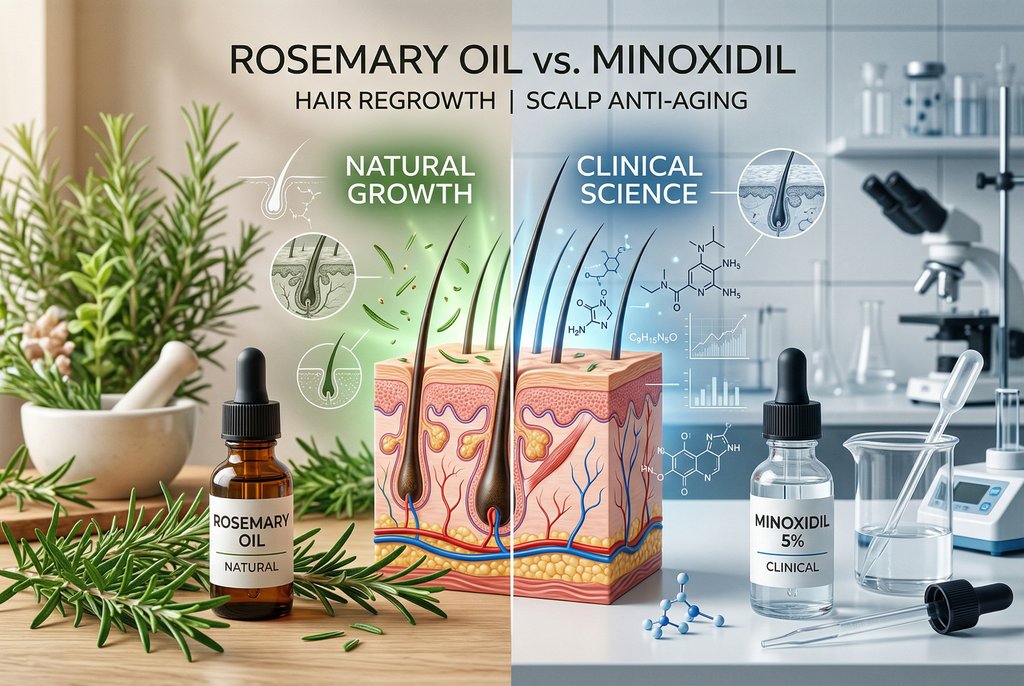
- A 2015 randomized trial found rosemary oil produced comparable hair growth to minoxidil 2% after six months, with fewer side effects like scalp itching.
- A 2025 double-blind clinical trial showed rosemary-based oil blends increased hair growth rate by up to 57.73% and hair thickness by 70% over 90 days.
- Rosemary oil works by increasing scalp blood circulation, blocking DHT, and reducing inflammation — all at a fraction of the cost of pharmaceutical alternatives.
Rosemary oil has exploded on social media as a natural hair growth remedy. But does the science back the hype — or is it another TikTok trend destined to fade?
The answer is more promising than you might expect. Multiple clinical studies — including a rigorous 2025 double-blind trial — have produced results that rival popular hair loss medications.
The Clinical Evidence: Two Key Studies
2015 Study: Rosemary Oil vs. Minoxidil
The study that started the conversation was published by Panahi et al. in the journal SKINmed. It involved 100 participants with androgenetic alopecia (pattern hair loss) — the most common form of hair loss affecting both men and women.
- Group A: Applied pure rosemary essential oil to their scalp twice daily
- Group B: Applied minoxidil 2% twice daily
- Duration: Six months
Both groups experienced a significant increase in hair count, with no statistically significant difference between the two treatments. The rosemary oil group also reported less scalp itching — a common side effect of minoxidil.
“Rosemary oil and minoxidil 2% showed comparable efficacy in increasing hair count after six months of treatment.” — Panahi et al., SKINmed, 2015
2025 Study: Rosemary Blends in a Double-Blind Trial
A more recent and rigorous study was published in Cureus in 2025 by Patel et al. This was a double-blind, randomized, three-arm, placebo-controlled clinical trial — the gold standard of research design.
The study enrolled 90 healthy participants aged 18-55 and evaluated two rosemary-based oil blends against coconut oil (placebo) over 90 days:
| Group | Hair Growth Rate | Hair Thickness | Hair Density | Hair Fall Reduction |
|---|---|---|---|---|
| Rosemary-Lavender Oil | +57.73% | +70% | +32% | Significant |
| Rosemary-Castor Oil | +47.59% | +66% | +32% | +40% |
| Coconut Oil (Placebo) | Minimal change | Minimal change | Minimal change | No change |
All results were statistically significant (p<0.0001). The study was registered with the Clinical Trials Registry – India and received ethics approval from ACEAS IEC.
How Rosemary Oil Works for Hair
Rosemary oil’s mechanism of action involves several complementary pathways:
| Mechanism | How It Helps |
|---|---|
| Increased blood circulation | Delivers more oxygen and nutrients to hair follicles |
| Anti-inflammatory properties | Reduces scalp inflammation that can damage follicles |
| Antioxidant effects | Protects follicles from free radical damage |
| 5-alpha-reductase inhibition | Blocks the enzyme that converts testosterone to DHT, the hormone linked to pattern baldness |
| Anagen phase extension | Keeps hair in the active growth phase longer |
This multi-pathway approach is why rosemary oil may work where single-mechanism treatments fall short. It doesn’t just stimulate growth — it creates a healthier environment for existing follicles to thrive.
How to Use Rosemary Oil for Hair Growth
Method 1: Scalp Massage with Carrier Oil
- Mix 5 drops of rosemary essential oil with 1 tablespoon of carrier oil (jojoba, coconut, or argan oil)
- Massage into the scalp for 5-10 minutes, focusing on thinning areas
- Leave on for at least 30 minutes (or overnight with a shower cap)
- Shampoo out thoroughly
- Repeat 3-5 times per week
Method 2: Add to Shampoo
- Add 10-15 drops of rosemary oil per 8 oz of shampoo
- Use as normal, massaging into the scalp for 2-3 minutes before rinsing
- Easiest method but may be less potent than direct application
Method 3: Rosemary Water Rinse
- Boil a handful of fresh rosemary sprigs in 2 cups of water for 15 minutes
- Cool and strain into a spray bottle
- Spray onto the scalp after shampooing, leave for 5 minutes, then rinse
- Store in the refrigerator for up to one week
What to Expect: Timeline and Results
| Timeframe | What to Expect |
|---|---|
| Weeks 1-4 | Scalp may feel healthier, less itching; no visible hair changes yet |
| Months 2-3 | Some users notice less hair shedding and baby hairs appearing |
| Months 3-4 | Measurable increase in hair density based on the 2025 study’s 90-day timeline |
| 6+ months | Full results based on the 2015 study’s timeline |
Consistency is critical. Both clinical studies showed results only after months of regular use. Sporadic application is unlikely to produce noticeable changes.
Side Effects and Precautions
Rosemary oil is generally well-tolerated, but keep these points in mind:
- Always dilute: Never apply undiluted essential oil directly to the scalp — it can cause irritation or burns
- Patch test first: Apply a small amount to your inner wrist and wait 24 hours to check for reactions
- Avoid during pregnancy: Rosemary oil may have emmenagogue effects; consult your doctor first
- Eye contact: Keep away from eyes; rinse immediately if contact occurs
- Scalp conditions: If you have eczema, psoriasis, or open wounds on the scalp, consult a dermatologist before use
- Medication interactions: May interact with blood-thinning medications or anticoagulants
Rosemary Oil vs. Other Natural Hair Growth Options
| Ingredient | Evidence Level | Cost | Side Effects |
|---|---|---|---|
| Rosemary Oil | 2 clinical trials (2015, 2025) | ~0-15/bottle | Low |
| Biotin | Limited (helpful if deficient) | ~0/month | Very low |
| Pumpkin Seed Oil | 1 clinical trial (oral) | ~5/month | Low |
| Saw Palmetto | Mixed evidence | ~5/month | Low-moderate |
| Peppermint Oil | 1 animal study | ~-12/bottle | Low |
Rosemary oil stands out because it has multiple human clinical trials — including a rigorous 2025 double-blind study. Combined with its low cost and minimal side effects, it’s one of the strongest natural options available.
For a broader approach to addressing hair loss naturally, consider combining rosemary oil with a nutrient-rich diet that includes biotin-rich foods and hair-boosting superfoods.
Disclaimer: This article is for informational purposes only and is not intended as medical advice. Always consult with a qualified healthcare professional before making changes to your health regimen.Frequently Asked Questions (FAQ)
How long does it take for rosemary oil to work on hair?
Based on the 2025 clinical trial, measurable improvements in hair growth rate and thickness appeared within 90 days. The 2015 study showed full results after six months. Most users should expect to see noticeable changes within 3-4 months of consistent use.
Can I leave rosemary oil in my hair overnight?
Yes, if properly diluted. Mix 5 drops of rosemary essential oil with a carrier oil (like jojoba or coconut oil) before applying. Cover with a shower cap or old pillowcase to protect bedding. Wash out in the morning with shampoo. Overnight application allows maximum absorption.
Does rosemary oil work for all types of hair loss?
Both clinical studies focused on androgenetic alopecia (pattern hair loss). Rosemary oil’s mechanisms — increased circulation, anti-inflammatory effects, and DHT blocking — may benefit other types of hair loss as well, but clinical evidence is limited. Consult a dermatologist for proper diagnosis of your hair loss type.
Can I mix rosemary oil with other essential oils?
Yes. The 2025 study specifically tested rosemary-lavender and rosemary-castor oil blends with positive results. Rosemary oil can also be combined with peppermint oil (which has its own hair growth evidence) or tea tree oil (for dandruff). Keep the total essential oil concentration at 2-3% when mixed with a carrier oil.
Is rosemary oil safe for color-treated hair?
Generally yes, but it may slightly accelerate color fading over time due to its cleansing properties. To minimize this, apply rosemary oil treatments on non-wash days and rinse with cool water. Alternatively, use rosemary-infused shampoo rather than direct oil application.