





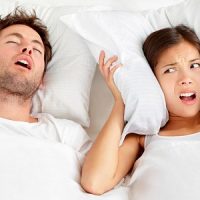
Snoring is far more than a minor domestic nuisance; it is an acoustic physical manifestation of turbulent, resistive airflow coursing through a mechanically compromised upper respiratory tract. During the descent into non-REM and REM sleep states, systemic parasympathetic tone dominates, causing marked physiological hypotonia across upper airway dilator muscles—chiefly the tensor veli palatini, genioglossus, and hyoglossus. As airflow traverses the narrowed oropharyngeal conduit during inspiration, fluid dynamics described by the Bernoulli principle dictate that airflow velocity must increase, precipitating a sharp decline in lateral intraluminal pressure. When this transmural suction force exceeds the structural rigidity of the surrounding compliant tissues, the flaccid soft palate, uvula, and pharyngeal mucosal pillars undergo violent acoustic flutter, generating the vibratory sounds of snoring. While severe nocturnal airway cessation accompanied by arterial oxygen desaturation warrants clinical evaluation for Obstructive Sleep Apnea (OSA), benign primary snoring and mild positional resistance can be safely alleviated through 6 science-backed, evidence-based home interventions: positional sleep therapy and cervical spine realignment to prevent gravitational base-of-tongue retroversion, targeted pharyngeal myofunctional exercises to increase oropharyngeal muscular tone and lower collapsibility thresholds, ultrasonic airway humidification with essential cineole steam to reduce mucosal shearing friction, external mechanical nasal valve dilation to diminish upstream inspiratory resistance, anti-inflammatory demulcent therapies combining curcumin and raw honey to soothe vibratory pharyngeal edema, and gradual reduction of parapharyngeal adipose tissue to expand the anatomical pharyngeal lumen.
Sleep Medicine Summary & Airway Biomechanics Takeaways
- The Gravitational Vector: Sleeping in the supine (back) position allows gravitational pull to retract the relaxed tongue base and flaccid soft palate toward the posterior pharyngeal wall, reducing oropharyngeal airway caliber by up to 50%.
- Myofunctional Remodeling: Daily 8-minute oropharyngeal exercises targeting the tongue, buccinator, and soft palate significantly increase dilator muscle tone during sleep, decreasing snoring frequency and decibel intensity by over 40%.
- Upstream Nasal Resistance: According to the Starling resistor model, high resistance at the anterior nasal valve generates massive downstream negative intraluminal pressures, sucking compliant pharyngeal tissues inward.

Pathophysiology of Snoring: Fluid Mechanics, Bernoulli Collapsibility, and Pharyngeal Resistance
The human upper respiratory airway is a collapsible musculo-membranous conduit that lacks rigid bony or cartilaginous support between the posterior border of the hard palate and the cricoid cartilage. Airway stability depends entirely upon the coordinated contraction of over twenty pairs of pharyngeal dilator muscles, balanced against the negative intraluminal pressure generated during thoracic inspiration.
Upon sleep onset, central respiratory motor drive to the genioglossus (which protrudes the tongue) and the tensor veli palatini (which stiffens the soft palate) diminishes sharply. In individuals possessing anatomical predispositions—such as an elongated uvula, retrognathia, enlarged palatine tonsils, or excess parapharyngeal adipose deposition—the airway cross-sectional area narrows. As air is sucked inward through this constriction, fluid dynamics take over: according to the Venturi effect and Bernoulli principle, fluid velocity (v) accelerates through the restriction, resulting in a proportionate drop in lateral static fluid pressure (P).
This localized vacuum draws opposing mucosal surfaces toward one another. If the closing pressure exceeds the mechanical tissue opening threshold, intermittent contact occurs, causing the soft palate and uvular margins to oscillate rapidly at frequencies between 30 and 150 Hz, emitting sound levels that frequently exceed 60 to 80 decibels. As detailed in comprehensive monographs from the National Institutes of Health (NIH) StatPearls on airway resistance and sleep-disordered breathing, untreated chronic vibratory trauma damages local sensory afferent nerves, inducing progressive pharyngeal neuropathy that worsens airway flaccidity over time. Integrating biomechanical adjustments alongside our foundational guide on how to sleep better at night and natural sleep aids like evidence-based natural sleep remedies provides holistic rest.
“Snoring is fundamentally a fluid dynamics crisis: when upstream resistance narrows the pharyngeal lumen, the Bernoulli effect generates a negative suction pressure that pulls compliant mucosal tissues into violent oscillatory contact.”
6 Science-Backed Home Remedies for Snoring
Overcoming benign snoring requires restoring anatomical airway patency, reinforcing neuromuscular dilator tone, and extinguishing local mucosal inflammation. The following 6 interventions provide robust, scientifically substantiated relief:
1. Positional Sleep Therapy & Cervical Spine Alignment (Supine to Lateral Decubitus Shift)
Supine sleeping (lying on the back) is the single most dominant physical exacerbator of primary snoring. In the supine position, gravity acts directly along the dorsoventral axis, pulling the flaccid tongue base, relaxed hyoid apparatus, and soft palate down against the posterior pharyngeal wall. This gravitational retroversion reduces the hypopharyngeal lumen by 40% to 60%, drastically accelerating airflow velocity and precipitating soft palate vibration.
Transitioning to lateral decubitus sleep (side-sleeping) fundamentally reorients the gravitational force vector perpendicular to the airway conduit, preventing tongue prolapse and maintaining hypopharyngeal patency. Clinical sleep studies indicate that positional therapy—utilizing specialized contoured ergonomic cervical pillows that support the lordotic cervical curve without hyperextending or flexing the neck, or positional bumper belts—reduces snoring time by more than 50% in positional snorers. Ensuring that cervical alignment keeps the mandible slightly forward maintains the tension of the suprahyoid musculature, stabilizing the anterior airway.
2. Targeted Pharyngeal Myofunctional Therapy (Oropharyngeal Muscle Reconditioning)
Pharyngeal collapsibility during sleep is heavily governed by baseline muscular tone. Just as peripheral skeletal muscles atrophy when underutilized, the orofacial and pharyngeal muscles can become flaccid, predisposing them to flutter under negative inspiratory pressure. Myofunctional therapy—calibrated isometric and isotonic exercises designed to strengthen the tongue, soft palate, and facial muscles—is supported by rigorous randomized controlled clinical trials in sleep medicine.
Clinical studies publish marked reductions in snoring index, decibel volume, and daytime fatigue after 8 to 12 weeks of daily myofunctional training. Effective daily protocols include: (1) Palatal tongue thrusts: pressing the entire tip and body of the tongue firmly against the hard palate for 5 seconds, repeating 20 times; (2) Soft palate elevation: pronouncing the open vowel “Ah” continuously for 3 seconds while visualizing upward retraction of the uvula; (3) Buccinator resistance: placing a clean finger inside the cheek while contracting cheek muscles to resist inward movement. These exercises induce neuroplastic hypertrophy in upper airway dilators, increasing structural stiffness during nocturnal unconsciousness.
3. Ultrasonic Airway Humidification & Inhaled Steam Therapy
Breathing dry, dehydrated ambient air (relative humidity < 30%, common during winter heating or dry air conditioning) strips the moisture from upper respiratory mucosal linings. This dehydration causes mucosal drying, increases mucus viscosity, and degrades the natural surfactant film that coats pharyngeal epithelial cells. Without this protective lubricating film, surface tension between opposing mucosal layers rises sharply, increasing mechanical shearing friction and predisposing dry tissues to stick together and vibrate violently.
Utilizing a cool-mist ultrasonic humidifier beside the bed maintains ambient bedroom relative humidity at an ideal 45% to 55%, preventing mucosal desiccation. Furthermore, performing 10 minutes of steam inhalation prior to sleep—infused with 2 to 3 drops of pure eucalyptus oil (rich in 1,8-cineole)—promotes mucosal secretolysis, liquifies sticky postnasal secretions, and activates trigeminal cold receptors to induce a subjective sensation of open airflow. For associated nasal congestion, cross-reference our sinus drainage guidelines in evidence-based home remedies for sinus infections.
4. External Mechanical Nasal Valve Dilation & Resistance Unloading
According to the Starling resistor model of human respiration, the upper airway acts as a tube with a compliant segment (the oropharynx) positioned downstream from an upstream resistor (the anterior nasal valve). If airflow encounters severe resistance in the anterior nose—due to allergic mucosal edema, a deviated nasal septum, or narrow nostrils—the inspiratory effort creates a massive negative pressure differential downstream. This vacuum sucks the flexible soft palate and uvula inward, triggering snoring.
Applying spring-like external nasal dilator strips across the nasal bridge physically pulls open the internal nasal valves, expanding the cross-sectional area of the anterior nasal vestibule. Peer-reviewed investigations in sleep clinics demonstrate that mechanical nasal dilation reduces upstream nasal airflow resistance by up to 30%, diminishing the required inspiratory vacuum pressure, terminating obligate mouth breathing, and substantially dampening soft palate flutter during sleep.
5. Anti-Inflammatory Pharyngeal Demulcents (Curcumin & Raw Honey)
Chronic snoring creates a destructive self-perpetuating cycle: high-frequency mechanical vibration of soft tissues during the night inflicts mucosal micro-trauma, local capillary dilation, and secondary edema across the uvula and posterior pharyngeal pillars. This swelling narrows the lumen further, intensifying snoring the subsequent night.
Topical and systemic anti-inflammatory agents break this cycle. Curcumin, the primary lipophilic polyphenol in turmeric (Curcuma longa), down-regulates nuclear factor-kappa B (NF-κB) and halts cyclooxygenase-2 (COX-2) signaling, attenuating soft-tissue inflammation in the pharynx. Concurrently, high-grade raw honey serves as a hyperosmotic demulcent; it coats the pharyngeal mucosa, draws excess interstitial fluid out of edematous uvular folds via mild osmotic action, and provides a soothing lubricating film that diminishes vibrational friction. Drinking a warm elixir of almond milk, 1/2 teaspoon of organic turmeric powder, and 1 teaspoon of raw honey 30 minutes before bed protects mucosal integrity.
6. Targeted Reduction of Parapharyngeal Adipose Deposition (Gradual Weight Optimization)
Excess body mass is one of the most powerful structural determinants of pharyngeal collapsibility. Adipose tissue is not deposited solely in the abdomen; magnetic resonance imaging (MRI) studies confirm that weight gain results in significant fat deposition within the lateral pharyngeal walls, the anterior neck fat pads, and crucially, within the muscular body of the tongue itself.
This localized adipose enlargement physically reduces the internal diameter of the pharyngeal conduit while increasing total tissue mass, elevating the critical closing pressure (Pcrit) required to maintain an open airway. Clinical trials reveal that a modest 5% to 10% reduction in overall body weight produces a disproportionate 30% to 50% decrease in parapharyngeal fat volume, markedly widening the retropalatal and retroglossal airspace and frequently eliminating positional primary snoring entirely. Implementing sustainable caloric balance alongside restorative herbal aids like herbal alternatives to melatonin supports deep metabolic recovery.
Comparative Biomechanical Matrix of Anti-Snoring Interventions
| Remedy / Biomechanical Modality | Airway Target & Physical Mechanism | Evidence Grade | Clinical Protocol & Safe Usage Boundary |
|---|---|---|---|
| 1. Positional Sleep Therapy | Lateral decubitus orientation; neutralizes gravitational retroversion of tongue base & soft palate. | High (Clinical Standard) | Use structured contour pillows or positional back-sleep alarms. Avoid extreme neck flexion or rotation. |
| 2. Pharyngeal Myofunctional Exercises | Hypertrophies genioglossus and tensor veli palatini; decreases airway collapsibility threshold (Pcrit). | High (RCT-Validated) | Perform 8 minutes of tongue-palate pressing and soft palate elevation twice daily for 8–12 weeks. |
| 3. Airway Humidification & Steam | Prevents mucosal desiccation; maintains epithelial surfactant layer; lowers surface shearing tension. | Moderate to High | Maintain bedroom humidity at 45%–55% with ultrasonic humidifier. Clean reservoir weekly to avoid mold. |
| 4. External Nasal Valve Dilators | Mechanically springs open anterior nasal vestibule; lowers upstream resistance and downstream vacuum. | High (Physiological Standard) | Apply adhesive strip across nasal flare immediately before sleep. Ensure skin is clean and oil-free. |
| 5. Turmeric & Raw Honey Demulcents | Curcumin down-regulates NF-κB; honey exerts osmotic fluid withdrawal from edematous uvular folds. | Moderate | Sip warm golden milk with 1/2 tsp turmeric and 1 tsp raw honey 30 minutes before bed. |
| 6. Parapharyngeal Fat Reduction | Reduces volume of lateral pharyngeal fat pads and lingual adiposity; expands anatomical cross-section. | High (Long-Term Curative) | Aim for gradual 5%–10% body weight loss through nutrition and low-impact cardiovascular training. |
Debunking Dangerous Viral Trends, Alcohol Risks & Critical OSA Red Flags
The ubiquity of snoring has spawned risky internet hacks and neglect of serious underlying sleep pathologies:
- The Dangerous Viral “Mouth-Taping” Trend: Applying adhesive tape over the lips before sleeping to force nasal breathing has surged across social media platforms. In individuals with underlying structural nasal obstruction (such as nasal septal deviation, severe turbinate hypertrophy, or acute allergies), mouth-taping blocks the secondary emergency breathing route, severely elevating nocturnal suffocation risks, inducing acute hypoxia, and posing lethal hazards in the event of nighttime regurgitation or vomiting. Never tape your mouth without formal laryngological clearance.
- Alcohol and Sedative Exacerbation: Consuming alcoholic beverages within 3 to 4 hours of bedtime is a potent instigator of violent snoring. Alcohol acts as a selective central nervous system depressant that disproportionately impairs hypoglossal motor nerve output to the genioglossus, causing total hypotonic collapse of the tongue base while simultaneously blunting the brain’s arousal threshold to nocturnal asphyxia.
- Critical Obstructive Sleep Apnea (OSA) Red Flags: Benign snoring must be clearly distinguished from life-threatening OSA. Consult a board-certified sleep specialist for polysomnography (sleep study) if you exhibit:
- Loud, irregular snoring punctuated by witnessed pauses in breathing, choking sounds, or sudden gasping for air;
- Excessive daytime sleepiness (falling asleep while driving, reading, or working);
- Waking with a dry mouth, morning frontal headaches, or cognitive brain fog;
- Treatment-resistant hypertension, atrial fibrillation, or elevated nocturnal urination frequency (nocturia).
Disclaimer: This article is for informational purposes only and is not intended as medical advice. Always consult with a qualified healthcare professional before making changes to your health regimen.
Frequently Asked Questions (FAQ)
How can I distinguish between benign primary snoring and Obstructive Sleep Apnea (OSA)?
Primary snoring is characterized by a rhythmic, steady breathing sound without significant pauses, maintained oxygen saturation, and normal daytime alertness. In contrast, Obstructive Sleep Apnea involves episodic cessation of airflow lasting 10 seconds or longer, accompanied by loud snorting or choking awakenings, drops in blood oxygen saturation (hypoxemia), waking with morning headaches, and severe daytime somnolence. If pauses in breathing occur, a diagnostic polysomnography study is mandatory.
Is mouth-taping safe for preventing mouth-breathing and snoring?
No. While transitioning to nasal breathing is physiologically beneficial, self-administered mouth taping carries serious hazards. If you suffer from unrecognized nasal valve collapse, deviated septum, or nocturnal acid reflux, sealing the lips eliminates your vital alternative breathing route, potentially causing severe nocturnal hypoxia or aspiration. Use external nasal strips and address nasal allergies instead.
How long does it take for myofunctional throat exercises to reduce snoring?
Clinical trials indicate that measurable reductions in snoring intensity and frequency typically emerge within 8 to 12 weeks of consistent daily myofunctional training. Because neuromuscular remodeling and muscle hypertrophy in pharyngeal dilators require repeated stimulus, performing the 8-minute routine twice daily is necessary to achieve lasting airway stability.
Why does alcohol make snoring significantly louder and more frequent?
Alcohol exerts a selective depressant effect on the hypoglossal nerve, which innervates the genioglossus muscle of the tongue. This induces profound muscular flaccidity in upper airway dilators during sleep, allowing the tongue base to collapse directly against the posterior pharyngeal wall. Furthermore, alcohol induces nasal mucosal congestion, accelerating airflow velocity and dramatically intensifying vibratory flutter.