




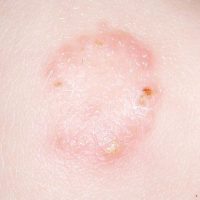
Ringworm (tinea corporis) is not caused by a parasitic helminth; it is a superficial fungal dermatophytosis provoked by specialized filamentous fungi—predominantly belonging to the Trichophyton, Microsporum, or Epidermophyton genera. These keratinophilic pathogens secrete specialized extracellular keratinase and protease enzymes to digest structural fibrous keratin within the stratum corneum, creating classic centrifugal, annular, erythematous scaling plaques with raised active borders and central clearance. While deep, recalcitrant, or follicular tinea infections require prescription systemic oral antimycotics, uncomplicated superficial ringworm can be countered with 5 clinically supported, evidence-based home remedies: terpinen-4-ol standardized tea tree oil to compromise fungal plasma membrane permeability, allicin- and ajoene-rich fresh garlic macerates to inhibit fungal ergosterol biosynthesis and tubulin polymerization, lauric acid-rich virgin coconut oil to induce lipid envelope and cellular membrane lysis, dilute apple cider vinegar compresses to create an unviable acidic microenvironment, and micronized curcuminoid turmeric paste to suppress fungal hyphal morphogenesis and quench inflammatory cytokines.
Mycological Summary & Antifungal Action Points
- Targeted Membrane Disruption: Botanical bioactives such as terpinen-4-ol and medium-chain fatty acids (lauric acid) partition directly into fungal phospholipid bilayers, causing cytoplasmic leakage, organelle degradation, and cellular lysis.
- Enzymatic and Ergosterol Inhibition: Organosulfur compounds (allicin and ajoene) inhibit squalene epoxidase and cross-link fungal tubulin sulfhydryl groups, arresting hyphal cell division without synthetic antimycotic resistance.
- Anatomical Redlines: Superficial home remedies are strictly limited to smooth skin (tinea corporis and tinea cruris); fungal infections of the scalp (tinea capitis) and nail beds (onychomycosis) cannot be penetrated by topical remedies and mandate prescription systemic oral antifungal pharmacotherapy.

Mycopathology of Tinea Corporis: Keratinase Virulence and the Annular Immune Response
Understanding why ringworm adopts its distinctive circular, centrifugal morphology requires examining the lifecycle of dermatophytes within human cornified tissue. When fungal arthroconidia (spores) encounter susceptible skin, they adhere to superficial corneocytes via specialized carbohydrate-binding adhesins. Upon germination, the fungal hyphae secrete an array of endo- and exo-proteases, notably fungal keratinases (such as subtilisin-like proteases Sub3 and Sub4), which hydrolyze tough insoluble keratin filaments into assimilable peptides and amino acids.
As the mycelium digests keratin, it spreads radially outward in an expanding circular pattern. The human host immune system mounts a cell-mediated (Type IV) delayed-type hypersensitivity reaction against fungal antigens. T-helper 1 (Th1) lymphocytes infiltrate the leading edge, releasing interferon-gamma (IFN-γ) and activating macrophages. This intense immune confrontation manifests clinically as the raised, erythematous, vesicular, and scaling active border. In the center of the lesion, fungal organisms have depleted their keratin substrate, while host cell-mediated immune clearance eliminates viable hyphae, resulting in the characteristic central clearing.
According to comprehensive mycological studies indexed in the National Center for Biotechnology Information (NCBI) on dermatophyte biology and cutaneous antifungal mechanisms, successfully eradicating tinea corporis requires penetrating the lipophilic stratum corneum, dismantling fungal cell membrane integrity, and continuing therapy well past visual lesion resolution to eradicate resilient fungal arthrospores. Integrating natural antifungal strategies alongside our clinical reviews on athlete’s foot eradication protocols and evidence-based remedies for fungal dysbiosis provides comprehensive antimycotic protection.
“Dermatophytes advance centrifugally as long as digestible keratin is present; because fungal arthrospores remain viable in peripheral desquamated skin scales, antifungal topical applications must extend at least 2 centimeters beyond the active advancing margin and continue for 7 to 10 days after visual clearance.”
5 Science-Backed Home Remedies for Ringworm
For mild, localized tinea corporis on glabrous (non-hairy) skin, the following 5 botanical and biochemical agents provide targeted antimycotic action validated by peer-reviewed pharmacological studies:
1. Terpinen-4-ol Standardized Tea Tree Oil (Ergosterol Synthesis Disruption & Membrane Lysis)
Tea tree essential oil (derived from Melaleuca alternifolia) is one of the most comprehensively investigated natural antifungals in modern dermatology. Its therapeutic potency against dermatophytic molds—including Trichophyton rubrum and Trichophyton mentagrophytes—stems primarily from its high concentration of the monoterpene alcohol terpinen-4-ol.
As detailed in clinical research published in Clinical Microbiology Reviews and indexed in the National Center for Biotechnology Information (NCBI), the lipophilicity of terpinen-4-ol enables it to partition into fungal cell membranes, increasing permeability and provoking massive leakage of intracellular potassium (K+) ions. This disrupts transmembrane electrical gradients, arrests mitochondrial respiration, and inhibits fungal ergosterol incorporation. Application Protocol: Never apply undiluted essential oil, which can cause severe contact dermatitis and mimic worsening infection. Blend pure tea tree oil with an equal volume (1:1 ratio) of virgin coconut oil or jojoba carrier oil. Using a sterile cotton swab, apply the solution generously across the entire lesion and 1 to 2 centimeters beyond the active margin twice daily for 2 to 3 weeks.
2. Fresh Crushed Garlic Extract and Ajoene (Microtubule Cross-Linking & Growth Arrest)
Garlic (Allium sativum) possesses extraordinary broad-spectrum antifungal properties, functioning almost identically to synthetic allylamine antifungals. Intact garlic cloves contain alliin and the vacuolar enzyme alliinase. When fresh garlic is mechanically crushed, alliinase rapidly converts alliin into allicin, which subsequently condensates into potent organosulfur compounds, most notably ajoene ((E,Z)-4,5,9-trithiadodeca-1,6,11-triene 9-oxide).
In clinical trial findings published in Antimicrobial Agents and Chemotherapy by the National Center for Biotechnology Information (NCBI) on ajoene efficacy, topical ajoene demonstrated fungal cure rates exceeding 90%, comparable to prescription allylamine creams. Mechanistically, ajoene covalently cross-links sulfhydryl (-SH) thiol groups on fungal tubulin dimers, halting mitotic spindle assembly and arresting hyphal cell division, while concurrently inhibiting squalene epoxidase. CRITICAL SAFETY WARNING: Never tape raw garlic cloves under an adhesive bandage or leave raw garlic on the skin overnight. Raw garlic contains pyrogenic sulfur complexes that cause excruciating chemical burns (allium contact dermatitis) and skin necrosis within hours. Instead, blend the juice of 1 freshly crushed garlic clove with 1 tablespoon of olive or coconut oil, apply topically for 10 to 15 minutes, and rinse thoroughly with lukewarm water twice daily.
3. Lauric Acid in Virgin Coconut Oil (Medium-Chain Fatty Acid Membrane Disruption)
Pure, unrefined virgin coconut oil is an exceptional natural adjunctive therapy for dermatophytosis, offering both direct mycological toxicity and vital barrier restoration. Coconut oil is extraordinarily rich in medium-chain triglycerides (MCTs), containing approximately 48% to 52% lauric acid (dodecanoic acid, C12:0) alongside caprylic and capric acids.
When applied topically, cutaneous lipases metabolize a portion of lauric acid into monolaurin. Medium-chain fatty acids mimic the lipid constituents of fungal cell membranes. They intercalate into the lipid bilayer of dermatophyte hyphae and conidia, disrupting molecular packing, creating structural pores, and solubilizing viral and fungal lipid envelopes. This physical membrane destabilization causes osmotic lysis and cellular collapse. Simultaneously, coconut oil replenishes the lipid matrix between corneocytes, sealing the damaged stratum corneum, restoring epidermal hydration, and preventing secondary bacterial excoriation. Apply virgin coconut oil directly to the ringworm lesion 3 times daily, ensuring the area is clean and thoroughly dry prior to application. For deeper insight into botanical lipid therapeutics, review our analysis on the physiological health benefits of pure coconut oil.
4. Dilute Acetic Acid / Apple Cider Vinegar Compresses (Microenvironmental Acidification)
The microenvironmental pH of the skin plays a crucial regulatory role in fungal colonization and virulence. Dermatophytes thrive and express their most destructive keratinase enzymes within slightly alkaline to neutral pH ranges (pH 6.5 to 7.5). Disrupting this alkaline niche suppresses their metabolic machinery.
Raw, unpasteurized apple cider vinegar contains approximately 5% acetic acid (CH3COOH). Diluting raw ACV 1:1 with distilled water produces a safe, mildly acidic compress (pH ~3.0 to 3.5). When applied to ringworm, this acidic solution temporarily lowers superficial epidermal pH, denaturing pH-sensitive fungal exo-enzymes (keratinases and elastases) that are necessary for fungal nutrition and invasion. Additionally, the acetic acid creates an osmotic and chemical environment that inhibits fungal arthroconidia spore germination. Soak a sterile cotton pad in the 1:1 diluted vinegar solution, press it gently onto the ringworm plaque for 10 minutes twice daily, and allow the area to air-dry completely. Never apply undiluted vinegar to open or broken skin to prevent chemical stinging.
5. Micronized Curcuminoid Turmeric Paste (Hyphal Morphogenesis Inhibition & Epithelial Soothing)
Turmeric, the rhizome of Curcuma longa, contains a complex of lipophilic polyphenol pigments known collectively as curcuminoids (predominantly curcumin, demethoxycurcumin, and bisdemethoxycurcumin). Beyond its systemic antioxidant properties, curcumin displays remarkable topical antimycotic and wound-healing actions against pathogenic dermatophytes.
Molecular investigations demonstrate that curcumin binds directly to fungal cell walls, inhibiting hyphal elongation and downregulating the transcription of fungal extracellular proteinases. Curcumin also induces intracellular reactive oxygen species (ROS) accumulation specifically within fungal mitochondria, triggering apoptotic cell death in dermatophyte hyphae. On the host tissue side, curcumin is a potent inhibitor of cyclooxygenase-2 (COX-2) and nuclear factor kappa B (NF-κB), dampening the intense inflammatory erythema, stinging, and pruritus generated by the host immune response. To prepare, combine 1 teaspoon of pure pharmaceutical-grade organic turmeric powder with 1/2 teaspoon of virgin coconut oil and a tiny drop of warm water to create a golden paste. Apply to the ringworm lesion for 20 to 30 minutes, then rinse clean with water. Be aware that natural turmeric temporarily stains fair skin and fabric yellow.
Mechanistic Matrix of Evidence-Based Ringworm Interventions
| Antifungal Agent / Botanical | Molecular Mechanism & Fungal Target | Clinical Evidence Level | Application Protocol & Safety Boundary |
|---|---|---|---|
| 1. Dilute Tea Tree Oil (Terpinen-4-ol) | Increases fungal membrane permeability; causes potassium (K+) leakage; impairs ergosterol synthesis. | High (Comparative Clinical Trials) | Dilute 1:1 with carrier oil. Apply 2–3 times daily for 14–21 days. Never apply 100% neat oil. |
| 2. Fresh Garlic Extract / Ajoene | Cross-links fungal tubulin sulfhydryl groups; halts mitotic spindle assembly; inhibits squalene epoxidase. | High (Comparable to Topical Terbinafine) | Blend fresh garlic juice with oil; apply for 10–15 minutes and rinse. NEVER bandage raw garlic overnight. |
| 3. Virgin Coconut Oil (Lauric Acid) | Intercalates into lipid bilayers of fungal hyphae; disrupts structural cell membranes; restores stratum corneum lipids. | Moderate to High | Apply generous layer 3 times daily to clean, dry skin. Non-irritating and suitable for sensitive skin. |
| 4. Dilute Apple Cider Vinegar (Acetic Acid) | Acidifies microenvironment (pH ~3.0); denatures pH-dependent fungal keratinase enzymes; inhibits spore germination. | Moderate (Laboratory & Empirical) | Dilute 1:1 with pure water. Apply as compress for 10 minutes twice daily. Allow to air dry thoroughly. |
| 5. Curcuminoid Turmeric Paste | Inhibits hyphal elongation and fungal protease secretion; induces fungal mitochondrial ROS; suppresses host NF-κB. | Moderate | Mix powder with coconut oil into paste. Apply for 20–30 minutes, then rinse. Leaves transient skin stain. |
Critical Clinical Red Flags & Prescription Thresholds
While uncomplicated tinea corporis on the torso, arms, or legs responds well to conservative topical antifungal protocols, several clinical scenarios demand immediate professional dermatological intervention and prescription pharmacotherapy:
- Scalp Ringworm (Tinea Capitis): Ringworm appearing on the scalp with brittle hair, localized alopecia (hair loss), or painful inflammatory boggy swellings (kerion) cannot be eradicated with topical remedies. The fungal hyphae invade deep into hair follicles and internal hair shafts (endothrix/ectothrix infection). Oral prescription systemic antifungals (such as griseofulvin or terbinafine) for 4 to 8 weeks are strictly mandatory to prevent permanent scarring alopecia.
- Nail Ringworm (Onychomycosis / Tinea Unguium): Fungi infecting the dense, hyperkeratotic nail plate cannot be reached by superficial home remedies. Eradication requires prescription oral systemic therapy or specialized high-potency prescription nail lacquers.
- Extensive, Recalcitrant, or Immunocompromised Infections: Plaques that cover large surface areas, lesions that worsen or fail to improve after 14 days of dedicated topical care, or infections occurring in individuals with diabetes mellitus, HIV, or those undergoing immunosuppressive therapy require formal mycology culture and prescription oral antimycotics.
- Diagnostic Mimicry: Annular red rashes can easily be misdiagnosed. Nummular eczema, psoriasis, pityriasis rosea (herald patch), granuloma annulare, and erythema annulare centrifugum can mimic ringworm. Applying home remedies to inflammatory non-fungal conditions—or applying topical corticosteroid creams to undiagnosed ringworm (producing tinea incognito)—can worsen the underlying dermatosis.
Disclaimer: This article is for informational purposes only and is not intended as medical advice. Always consult with a qualified healthcare professional before making changes to your health regimen.
Frequently Asked Questions (FAQ)
How long is ringworm contagious after starting treatment?
Ringworm typically remains contagious for approximately 24 to 48 hours after initiating effective topical antifungal treatment, provided the lesion is kept clean, dry, and lightly covered with loose clothing. However, fungal arthroconidia shed on clothing, bedding, and towels remain viable and infectious for weeks in moist environments. Wash all personal linens, towels, and clothing in hot water (at least 60°C / 140°F) with a fungicidal detergent to prevent self-reinfection.
Why shouldn’t raw garlic be taped onto the skin with a bandage overnight?
Taping raw crushed garlic under an occlusive bandage is an extremely dangerous internet myth. Intact raw garlic releases potent sulfur irritants (diallyl disulfide and allicin) that cause severe acute chemical burns, irritant contact dermatitis, epidermal blister formation, and tissue necrosis within hours of occlusive contact. Garlic must always be blended with a carrier oil, left on the skin for only 10 to 15 minutes, and rinsed thoroughly.
Can ringworm be caught from domestic pets like cats and dogs?
Yes, ringworm is a major zoonotic infection. Domestic cats and dogs—especially kittens and puppies—are frequent carriers of Microsporum canis, often presenting with subtle circular hair loss or crusty patches around their ears, nose, and paws. If an individual develops ringworm, all household pets should be evaluated by a veterinarian, as untreated carrier animals will continuously reinfect family members.
Why must antifungal treatment continue after the skin rash has completely disappeared?
Topical treatment must be continued for at least 7 to 10 days after the red ring has completely vanished from the skin surface. Even when clinical erythema and scaling resolve, microscopic fungal arthrospores can remain dormant within the deeper stratum corneum. Discontinuing treatment prematurely allows these residual spores to germinate, causing rapid clinical relapse.